
6 authors, including:

Md Ahadul Islam
Montclair State University
1 PUBLICATION 6 CITATIONS

Md. Tariqul Islam
Patuakhali Science and Technology University
12 PUBLICATIONS 95 CITATIONS

Seaam Bin Masud
Wilmington University
5 PUBLICATIONS 11 CITATIONS

Md Rafiuddin Siddiky
Wilmington University
5 PUBLICATIONS 14 CITATIONS
Artificial intelligence in digital marketing automation: Enhancing personalization, predictive analytics, and ethical integration
Md Ahadul Islam1, Shafiqul Islam Fakir2, Seaam Bin Masud3*, Md. Deluar Hossen4, Md Tariqul Islam5, Md Rafiuddin Siddiky6
gital Marketing Analytics, Montclair State University, New Jersey, United States, ahadulislam.du@gmail.com
(M.A.I.).
nt of Tourism and Hospitality Management, University of Dhaka, Dhaka, Bangladesh; shafiqfakir.du@gmail.com
(S.I.F.
3M.S. in Information Technology Project Management, Wilmington University, New Castle, Delaware, United States; seaam.masud@gmail.com (S.B.M.)
4Master of Business Administration in Business Analytics (MBA-BAn), International American University, Los Angeles Main Campus, Los Angeles, California, United States, deluar600626@gmail.com (M.D.H.)
5Department of Management Studies, Patuakhali Science and Technology University, Dumki, Patuakhali-8602, Bangladesh; tareq.islam@pstu.ac.bd (M.T.I.)
6Master’s of Science in Information Systems Technology, Wilmington University, New Castle, Delaware, United States; mdrafiuddinsiddiky@gmail.com (M.R.S.)
Abstract: Artificial Intelligence (AI) is revolutionizing digital marketing automation by enhancing efficiency, personalization, and predictive capabilities. This study examines the role of AI in transforming marketing practices, focusing on its applications, benefits, ethical considerations, and future directions. By leveraging AI tools such as predictive analytics, NLP, and chatbots, businesses can achieve improved customer segmentation, content personalization, and campaign optimization in marketing strategies. Secondary data from journals, articles, and conference papers were synthesized to provide insights into AI’s impact on digital marketing automation. A systematic literature review utilizing the PRISMA methodology initially identified 2,850 records from database searches. Following the removal of duplicates and non-relevant studies, 1,035 records were screened for eligibility based on defined criteria, resulting in the inclusion of 150 relevant studies and 25 high-quality reports for detailed analysis. This robust approach ensured the inclusion of high-quality research, minimizing biases. The findings reveal that AI enhances digital marketing by streamlining processes, automating repetitive tasks, and delivering hyper-personalized customer experiences. Predictive analytics helps anticipate consumer behavior, while chatbots improve real-time customer engagement. However, challenges such as data privacy, algorithmic bias, and the high costs of AI adoption persist. AI adoption allows businesses to make data-driven decisions, improve customer retention, and maximize return on investment. Ethical AI practices, such as transparency and algorithm fairness, are essential for maintaining consumer trust. The study primarily focuses on existing literature, with limited empirical validation. Future research should explore long-term effects of AI-driven marketing on consumer behavior and investigate its integration with emerging technologies like the Internet of Things (IoT) and blockchain. Additionally, tailored AI solutions for SMEs and under-researched areas, such as B2B
marketing, are critical for inclusive growth.
Keywords: Artificial intelligence (AI), Chatbots and NLP, Customer personalization, Digital marketing automation,
Ethical AI practices, Marketing innovation, PRISMA, Predictive analytics,
- Introduction
In the rapidly evolving digital landscape, artificial intelligence (AI) has become a transformative force in multiple sectors (Hossain et al., 2024), with digital marketing being a key beneficiary (Zaki, 2019). AI technologies have advanced to the point where they can process vast amounts of data, recognize patterns, make predictions, and even make decisions with minimal human intervention (Dwived et al., 2021). These advancements are revolutionizing how businesses interact with customers and are reshaping marketing strategies at a fundamental level. Digital marketing (DM), characterized by its dependence on real-time data and customer engagement, stands to benefit immensely from the capabilities that AI offers (Ziakis, & Vlachopoulou, 2023). From predictive analytics and machine learning algorithms to the automation of routine tasks, AI promises to streamline processes, optimize strategies, and deliver more personalized experiences to consumers (Uddin et al., 2024).
The integration of AI into DM is driven by the need for businesses to become more data-driven, customer-centric, and efficient (Uddin & Hossain, 2010). As consumers interact with brands across various digital platforms, they leave behind a trail of data that AI systems can analyze to uncover insights (Sawon et al., 2024). These insights enable marketers to understand customer behavior, predict future actions, and deliver highly personalized content (Rahman et al., 2024). By utilizing AI, businesses can improve their marketing performance, increase customer satisfaction, and ultimately enhance their return on investment (ROI) (Almestarihi et al., 2024). AI in marketing can be classified into several types, including mechanical AI, thinking AI, and feeling AI (Bhuiyan, 2024; Rahman et al., 2024). These categorizations highlight the different ways AI is utilized in marketing strategies. Mechanical AI is designed to automate repetitive tasks, such as data collection and analysis, providing efficiency and consistency (Poli, 2024). AI, on the other hand, processes unstructured data to make decisions or predictions based on patterns identified in the data (Hossen et al., 2024). Finally, feeling AI is focused on understanding and responding to human emotions, enabling brands to engage with customers on a deeper emotional level through conversational agents like chatbots and virtual assistants (Alabed et al., 2024). As AI technologies continue to evolve, their applications in DM are becoming increasingly sophisticated. AI-driven tools, such as automated customer segmentation, targeted advertising, and content personalization, are being integrated into marketing campaigns to optimize their effectiveness (Haleem et al., 2022). Furthermore, AI is playing a pivotal role in the development of customer relationship management (CRM) systems, enabling businesses to manage customer interactions and automate various marketing processes (Hossen, 2024). These AI-powered CRM systems can help marketers not only collect and organize customer data but also predict customer needs and behavior, leading to more targeted marketing campaigns (Hossain et al., 2024). While the potential of AI in DM is vast, it is important to recognize the challenges and ethical considerations that come with its use (Milon et al., 2024). The collection and processing of large amounts of personal data raise concerns about privacy and data security (Masum et al., 2024). Additionally, algorithmic bias and transparency in AI decision-making processes are critical issues that need to be addressed to ensure the responsible and ethical use of AI technologies (Lepr et al., 2018). Despite these challenges, the advantages of AI in digital marketing automation (DMA) are undeniable, and businesses that successfully implement AI-driven marketing strategies are poised to gain a competitive edge (Shanmugam et al., 2023). The integration of AI in DM has shown immense potential for enhancing marketing automation and delivering personalized consumer experiences (Milon, 2024). However, while numerous studies have highlighted AI’s role in DMA, several research gaps remain that need to be addressed to provide a more comprehensive understanding of the topic (Bhuiyan & Akter, 2024). This article aims to explore the various ways in which AI is enhancing DMA, focusing on its applications, benefits, challenges, and
future directions. By examining the current literature on AI in marketing, this article will provide a comprehensive overview of how AI is transforming digital marketing practices and its potential to drive innovation and efficiency in the industry (Mani, 2024). Through a systematic review of the relevant research, this article will highlight key trends and emerging technologies that are shaping the future of AI-driven marketing automation
Several studies have explored AI’s application in different marketing segments, such as personalization, predictive analytics, and customer segmentation (Bhuiyan, 2024). However, there is a gap in creating unified frameworks that address the holistic integration of AI across various stages of DMA (Bhuiyan et al., 2023). While Huang and Rust (2020) introduced a strategic framework for AI’s application in marketing research, strategy, and action, there is still a need for further development of comprehensive frameworks that incorporate AI across the entire marketing lifecycle (Huang & Rust, 2020). This gap presents an opportunity to develop an integrated approach that ties together AI applications across various digital marketing channels (Bhuiyan et al., 2024). Although significant attention has been given to AI’s role in Business-to-Consumer (B2C) DM, its application in Business-to Business (B2B) marketing is relatively under-researched. Saura et al. (2021) discusses the use of AI-based Customer Relationship Management (CRM) systems in B2B marketing but calls for more research into specific AI applications in the B2B digital marketing context. Given the complexity of B2B relationships, future studies should explore how AI can be utilized to optimize interactions, predict purchasing behaviors, and streamline marketing strategies in B2B environments. Based on the identified research gaps, this study aims to bridge the existing gaps by addressing the following research objectives:
RO 1: To develop an integrated framework for AI-driven digital marketing automation (DMA)
RO 2: To examine the role of AI in personalization and predictive analytics
RO 3: To investigate ethical implications and feasibility of AI adoption
2. Literature Review
AI has become a pivotal element in transforming the DM landscape by enhancing automation, customer engagement, and personalization (Keegan et al., 2024). The integration of AI into DMA allows businesses to streamline operations, predict consumer behavior, and tailor marketing strategies to meet individual customer preferences. This section reviews the existing literature on AI’s role in enhancing DMA, exploring key areas such as customer personalization, predictive analytics (PA), content optimization, and challenges associated with AI implementation in DM (Ziakis, & Vlachopoulou, 2023).
Despite the widespread use of AI in marketing, concerns around ethics and data privacy remain underexplored. Ziakis and Vlachopoulou (2023) acknowledge the significant role of AI in DM but highlight that the ethical implications of AI, such as algorithmic bias and the protection of consumer data, are often overlooked (Hossen et al., 2025). As AI systems become more involved in personalizing content and predicting customer behavior, the lack of rigorous ethical guidelines for AI use could lead to privacy violations and loss of consumer trust (Saura et al. et al., 2021). Research that provides a clear ethical framework for AI deployment in marketing is a critical area for future investigation (Hossain, 2024).
Much of the existing research on AI in DM focuses on large enterprises with vast resources and data infrastructure (Hossain et al., 2024). However, smaller businesses may face unique challenges in adopting AI technologies due to financial constraints, technological barriers, and a lack of skilled personnel. This gap in the literature highlights the need for research that addresses the feasibility, challenges, and strategies for small businesses to effectively implement AI in DMA (Faraji et al., 2024). Understanding how AI can be tailored for smaller enterprises can drive more inclusive technological advancements in the marketing field (Bhuiyan et al., 2024).
While AI’s ability to personalize and automate marketing strategies has been widely studied, the long-term effects on consumer behavior and brand loyalty are underexplored. AI-driven marketing campaigns are typically designed for short-term gains, such as increasing conversion rates or improving customer satisfaction. However, the long-term impact of AI on consumer trust, brand engagement, and loyalty needs further attention. Research by Potwora et al. (2024) discussed on the personalization capabilities of AI, but the lasting impact of these personalized experiences on consumer relationships with brands requires deeper investigation.
2.1. AI in Personalization and Customer Engagement
One of the most significant applications of AI in DM is the ability to personalize customer experiences. According to Huang and Rust (2020), AI-driven personalization can improve customer engagement by analyzing vast amounts of data, including purchase history, browsing behavior, and social media interactions. AI enables marketers to predict customer preferences and deliver tailored content, which can significantly increase conversion rates and customer loyalty. Personalized marketing, powered by AI, allows for dynamic content generation, real-time recommendations, and automated customer segmentation.
Research by Saura et al. (2021) supports these findings by highlighting the importance of AI in automating customer segmentation based on demographic, psychographic, and behavioral data. AI tools can analyze patterns in customer interactions to identify emerging trends and create predictive models that help businesses target the right audience with the right message. Furthermore, Ziakis and Vlachopoulou (2023) emphasize that AI is instrumental in providing a seamless customer experience across multiple channels, including websites, mobile apps, and social media platforms.
2.2. Predictive Analytics (PA) and Consumer Behavior
PA is another crucial application of AI in DMA (George et al., 2024). Machine learning (ML) algorithms and AI-based predictive models enable marketers to forecast consumer behavior with greater accuracy, allowing businesses to anticipate customer needs and deliver proactive marketing strategies (Haleem et al., 2022). These predictive models use historical data and behavioral patterns to make informed decisions about product recommendations, pricing strategies, and promotional campaigns (Keegan et al., 2024). AI’s ability to predict consumer behavior not only enhances targeting efforts but also optimizes marketing campaigns by automating decision-making processes (Hlongwane et al., 2024).
For example, AI can predict the likelihood of a customer making a purchase based on past interactions, improving the efficiency of advertising spend (Potwora et al., 2024). Furthermore, the PA, combined with AI, can significantly improve lead scoring, sales forecasting, and customer retention efforts by identifying high-value customers and potential churn risks (Hasan et al., 2024).
2.3. Content Optimization and Automated Campaigns
AI-driven content optimization is a transformative aspect of DMA (Halid et al., 2024). AI tools can
analyze user engagement data to determine which content resonates most with target audiences. This
data can be used to automatically adjust content, optimize keywords, and personalize messaging for
improved performance across digital platforms (Saura et al. et al., 2021). For example, AI-powered
chatbots can automate customer service, addressing frequently asked questions and providing
personalized responses based on user behavior. According to Ziakis and Vlachopoulou (2023), AI is also
revolutionizing email marketing by enabling marketers to send personalized messages to customers at
optimal times, increasing open rates and click-through rates. Similarly, Potwora et al. (2024) discuss the
growing role of AI in automating social media campaigns. AI tools can analyze social media
engagement, identify trending topics, and optimize content delivery to maximize audience reach and
engagement (Bolón-Canedo et al., 2024).
2.4. Challenges in AI Implementation for Digital Marketing
While the benefits of AI in DM are undeniable, there are several challenges that businesses must address to fully leverage its potential (Coccia, 2024). The high costs associated with AI implementation, particularly for small and medium-sized businesses, remain a significant barrier (Haleem et al., 2022). AI technologies require substantial investment in infrastructure, skilled personnel, and training programs, which can be prohibitive for many organizations (Durai et al., 2024). Furthermore, Saura et al. (2021) highlights the ethical concerns surrounding the use of AI in DM. Data privacy issues, algorithmic bias, and transparency in AI decision-making processes are critical considerations that need to be addressed to ensure responsible AI use in marketing (Amiri et al., 2024). As AI tools increasingly rely on vast amounts of consumer data, businesses must adopt robust data protection measures to maintain consumer trust and comply with regulations such as the GDPR (General Data Protection Regulation) (Ziakis & Vlachopoulou, 2023).
2.5. AI’s Role in B2B Marketing and CRM Systems
While AI’s application in Business-to-Consumer (B2C) marketing is well-documented, its role in Business-to-Business (B2B) marketing is less explored. According to Saura et al. (2021), AI-powered Customer Relationship Management (CRM) systems have the potential to transform B2B marketing by automating lead generation, improving sales forecasting, and enhancing customer service (Babina et al., 2024). These AI-driven CRM systems enable businesses to analyze customer data more effectively, helping them make data-driven decisions that improve customer satisfaction and retention (Bharadiya et al., 2023). Research by Ziakis and Vlachopoulou (2023) indicates that AI is increasingly being adopted in B2B marketing to streamline processes such as account-based marketing (ABM) and targeted outreach (Abrokwah-Larbi et al., 2024). AI tools can automate the identification of high-value leads and tailor marketing campaigns to specific accounts, ensuring that businesses target the right prospects with relevant content (Abildtrup, 2024; Ahmed, 2024).
Table 1.
Notable previous studies of AI in DMA
| Source | Objectives | Methodology | Findings | Discussion | Implications |
| Dumitriu & Popescu (2019) | Analyze AI’s impact on digital marketing, focusing on keyword research and SEO. | Literature review, model development for keyword optimization. | AI simplifies targeting and customization in marketing, enhancing visibility and efficiency. | The development of AI-powered systems leads to more efficient marketing strategies, such as AI-enhanced keyword research and SEO. | Companies should adopt AI tools to optimize SEO, with a focus on integrating voice search. |
| Ziakis & Vlachopoulo u (2023) | Investigate AI’s application in various marketing segments (social media, e-commerce, etc.). | Systematic literature review, bibliometric analysis. | AI transforms digital marketing through datadriven strategies, improving customer engagement and personalization | AI is reshaping digital marketing by enhancing customer personalization and optimizing campaigns. | Businesses need to leverage AI to stay competitive and optimize marketing strategies. |
| Haleem et al. (2022) | Review AI applications in digital marketing, including personalized content and customer engagement. | Literaturebased study, analysis of AI tools in marketing. | AI improves customer engagement, personalization , and campaign optimization. | AI helps businesses better understand customer behavior and personalize marketing strategies | Marketers must adopt AI tools to enhance personalization and customer retention. |
| Saura et al. (2021) | Study the use of AI in B2B digital marketing, particularly within CRM systems. | Literature review, statistical analysis using MCA (Multiple Correspondenc e Analysis). | AI enhances CRM efficiency in B2B, improving decisionmaking and customer relationship management. | AI integration into CRM systems streamlines marketing operations and boosts customer engagement. | B2B marketers should integrate AI into their CRM systems for better customer insights and relationship management |
| Huang & Rust (2020) | Develop a strategic AI framework for marketing | Conceptual paper, theoretical framework development | AI can optimize marketing through three stages: research, strategy, and action (STP). | The framework provides actionable insights for integrating AI into strategic marketing processes. | Marketers should use the strategic framework for integrating AI into their marketing plans, focusing on personalization and customer interaction |
| Potwora et al. (2024) | Examine AI’s role in marketing automation, personalization , and forecasting. | Systematic literature review, thematic analysis. | AI streamlines marketing tasks, enhances customer interactions, and provides accurate forecasting. | The integration of AI into marketing increases operational efficiency and personalization | Marketers should focus on automating processes and using AI for accurate market predictions. |
| Girsawale et al. (2024) | Explore the role of AI in optimizing digital marketing efforts. | Literature review, case studies, and empirical examples. | AI automates and personalizes marketing tasks, improving customer engagement and ROI. | The paper discusses AI’s role in content optimization, personalization , and campaign automation. | Businesses should invest in AI technologies to enhance campaign effectiveness and ROI. |
| Chintalapati & Pandey (2022) | Analyze AI’s role in digital marketing, focusing on content marketing and customer interaction. | Systematic review, thematic analysis. | AI personalizes content, optimizes customer interactions, and improves marketing strategies. | AI’s potential to enhance marketing operations is evident, but businesses must balance automation with human creativity. | Digital marketers should adopt AI tools for personalization while maintaining human oversight incontent creation. |
| Verma et al. (2020) | Provide a comprehensive overview of AI in marketing from 1982 to 2020. | Systematic review, analysis of historical trends in AI marketing research. | AI has transformed marketing by automating processes and enabling personalized customer experiences. | The integration of AI into marketing has led to significant improvements in customer engagement and marketing ROI. | AI adoption in marketing will continue to grow; businesses must keep pace with technological advancements. |
| Dumitriu & Popescu (2020) | Explore how AI solutions improve website visibility through intelligent marketing systems. | Case study, model development. | AI improves SEO through keyword optimization and smart algorithms for content visibility. | The use of AI in SEO and digital marketing enhances visibility and reduces complexities in targeting | Marketers should integrate AIdriven SEO tools to improve website rankings and user engagement |
3. Research Methodology
The PRISMA framework is a widely used tool for conducting systematic reviews and meta-analyses (Bhuiyan, 2024). It provides a structured process for identifying, screening, and selecting relevant studies, ensuring that the review is comprehensive, transparent, and reproducible. According to Haddaway et al. (2022), the PRISMA framework enhances the credibility of the review by emphasizing the need for a transparent method for data collection and analysis. In examining the role of AI in enhancing Digital Marketing Applications (DMA), this study employs a systematic literature review approach, following the PRISMA methodology (Akter et al., 2023). The systematic review method is appropriate for synthesizing a large body of research, especially in emerging fields like AI in digital marketing, where there is a need to analyze and collate insights from various studies across different sectors (Zhang et al., 2024).
This study adopts a secondary data-based approach. Secondary data from published articles, journals, and conference papers are used to analyze the impact and applications of AI in DMA. The data collection process follows the systematic approach outlined in the PRISMA guidelines, which is critical for ensuring the robustness and credibility of the research findings (Bhuiyan et al., 2024). This study adopts a systematic approach to review literature on AI applications in DMA. The methodology follows the PRISMA 2020 guidelines for systematic reviews, ensuring rigorous identification, screening, and inclusion of relevant studies (Page et al., 2021). The steps are as follows:
3.1. Identification of Studies
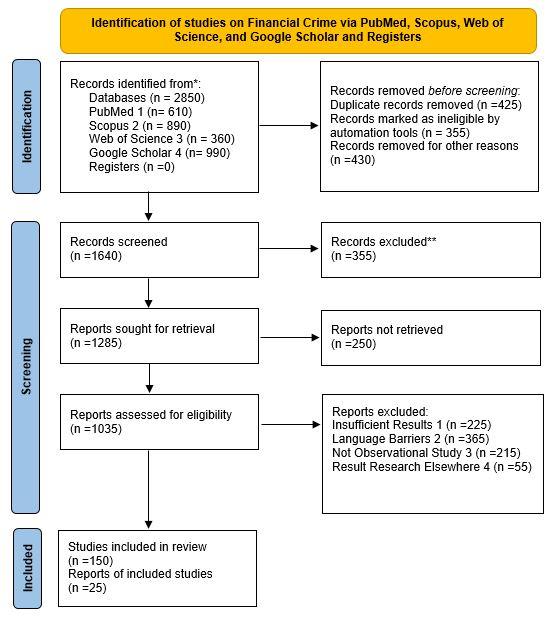
A comprehensive search was conducted across multiple databases to identify relevant studies (Venkataramanan et al., 2024). These included PubMed, Scopus, Web of Science, and Google Scholar. The total records identified from these sources amounted to 2850 studies, with specific contributions from each database (PubMed: 610, Scopus: 890, Web of Science: 360, Google Scholar: 990). Additional records were sought from registries, but no studies were identified from this source in this case.
3.2. Screening
After duplicates and irrelevant records were removed, 1640 records were screened for their relevance to the research topic. Exclusion criteria were applied at this stage, including insufficient results (225 records), language barriers (365 records), studies that were not observational (215 records), and research that duplicated results from other studies (55 records). This process resulted in 1035 reports being assessed for eligibility.
3.3. Eligibility Assessment
The 1035 reports were reviewed for eligibility. Studies were included if they presented empirical research on AI tools and their impact on DMA, focusing on areas like personalization, customer engagement, content optimization, and PA. The final set of eligible studies was narrowed down to 150 studies.
3.4. Inclusion
Out of the 150 studies assessed, 25 were included in the final review based on their relevance and methodological rigor. These included studies demonstrated the application of AI in DMA, including machine learning for customer segmentation, chatbots for customer service, and PA for marketing strategies (Amin et al., 2024).
The PRISMA methodology is especially well-suited for this study as it provides a clear, standardized approach to systematically collect and analyze research articles, ensuring that all relevant studies are included while minimizing bias (Bhuiyan, 2023;2024). This method is also highly effective when dealing with large datasets, such as the extensive body of literature on AI applications in DM (Toorajipour et al., 2024). It ensures that only high quality and relevant studies are included in the review.
3.5. Previous Studies Supporting Methodology
Numerous studies have effectively utilized the PRISMA framework in the domains of technology and marketing research. For instance, Bhuiyan et al. (2024) conducted a systematic review using PRISMA to explore digital transformation in Bangladesh, including discussions on AI applications across various industries, particularly marketing (Islam et al., 2024). Their findings highlight the importance of structured review methodologies to assess the influence of emerging technologies on national progress. Similarly, Islam et al. (2022) applied the PRISMA framework to investigate AI’s role in digitalizing public sector operations (Bhuiyan et al., 2024), emphasizing the value of systematic reviews in comprehending complex technological integrations, a critical aspect when examining AI’s application in marketing automation.
3.6. Justification for Using the PRISMA Methodology
The PRISMA framework is highly appropriate for this study due to its unique strengths:
- Comprehensive Literature Integration: It facilitates the inclusion of all pertinent studies, ensuring a holistic understanding of AI’s role in marketing automation (Sarker et al., 2024).
- Enhanced Transparency and Replicability: The framework’s structured approach ensures clarity, making it easier for researchers to replicate and validate findings (Rajan, 2024).
- Stringent Quality Assurance: PRISMA promotes the inclusion of only high-quality, relevant research, minimizing potential biases and strengthening the reliability of results (Rahate et al., 2024).
4. Discussion
This document provides a literature review of AI in DMA, including the application of AI tools such as ML, chatbots, PA, and more (Zhang net al., 2024). The review is based on various studies and discusses how AI is reshaping DM strategies.
4.1. AI in Digital Marketing (DM)
AI plays a crucial role in DM by automating processes, personalizing customer interactions, and
optimizing marketing strategies (Bhuiyan et al., 2024). AI tools, such as ML algorithms, chatbots, and
PA, are used to enhance customer engagement and improve the overall efficiency of marketing
campaigns (Werbos, 2024).
4.2. AI Tools in Digital Marketing
These AI tools are critical to enhancing various aspects of DM, from improving customer engagement to optimizing campaign effectiveness, and they offer businesses a strategic advantage in a highly competitive marketplace.
| AI tools | Application | Benefits | Source |
| Machine Learning (ML) | Customer segmentation, Predictive analytics | Improved targeting and personalization | (Venkataramanan et al., 2024) |
| Chatbots | Customer service automation | Enhanced customer engagement and 24/7 availability | (Ucar et al., 2024) |
| Analytics | Campaign performance prediction | Optimized decision-making and budget allocation | (Rane et al., 2024) |
| Natural Language Processing (NLP) | Content creation, sentiment analysis | Improved content relevance and user satisfaction | (Sarker et al., 2024) |
| Image Recognition | Ad targeting, social media | Enhanced customer profiling and engagement | (Toorajipour et al., 2024) |
4.2.1. Machine Learning
Machine learning (ML) enables marketers to segment their customers based on behavioral data, allowing businesses to better target specific audiences with personalized content (Haleem et al., 2022). By analyzing large datasets, ML algorithms identify patterns and trends that can be used to predict customer behavior and preferences. This predictive capability allows companies to optimize their marketing strategies and improve the relevancy of their offers, leading to higher customer engagement and satisfaction (Ziakis & Vlachopoulou, 2023).
4.2.2. Chatbots
Chatbots use natural language processing (NLP) and Ml to interact with clients automatically, responding to queries and assisting with tasks. This automation significantly improves customer service by providing instant responses and ensuring that customers receive assistance around the clock (Dumitriu & Popescu, 2019). Chatbots not only improve customer engagement by offering personalized interactions but also reduce operational costs by automating routine customer service tasks.
4.2.3 Predictive Analytics (PA)
PA leverages historical data and advanced algorithms to forecast future outcomes, such as the potential success of marketing campaigns. By predicting which campaigns are likely to perform well, businesses can allocate resources more effectively, optimizing their marketing budgets and maximizing returns on investment (ROI) (Potwora et al., 2024). Additionally, PA helps in making informed decisions about campaign adjustments in real-time.
4.2.4. Natural Language Processing (NLP)
Natural Language Processing (NLP) enables AI systems to understand, interpret, and generate human language. In digital marketing (DM), NLP is used to create personalized content, analyze customer sentiment, and optimize messaging based on emotional context (Ziakis & Vlachopoulou, 2023). By analyzing customer feedback, reviews, and social media interactions, NLP tools provide businesses with insights into customer sentiments, enabling them to refine content and communication strategies that resonate with their audience.
4.2.5. Image Recognition
Image recognition technology uses AI to analyze and interpret visual content, such as images and videos, to identify objects, people, or other elements within them. In digital marketing (DM), this technology is particularly valuable for targeting ads based on visual content preferences (Huang & Rust, 2020). By understanding which images or types of media resonate with specific customer segments (Bhuiyan et al., 2024),businesses can enhance their customer profiling and engagement, ensuring that marketing materials are more relevant and impactful.
4.2.6. AI in Digital Marketing Framework
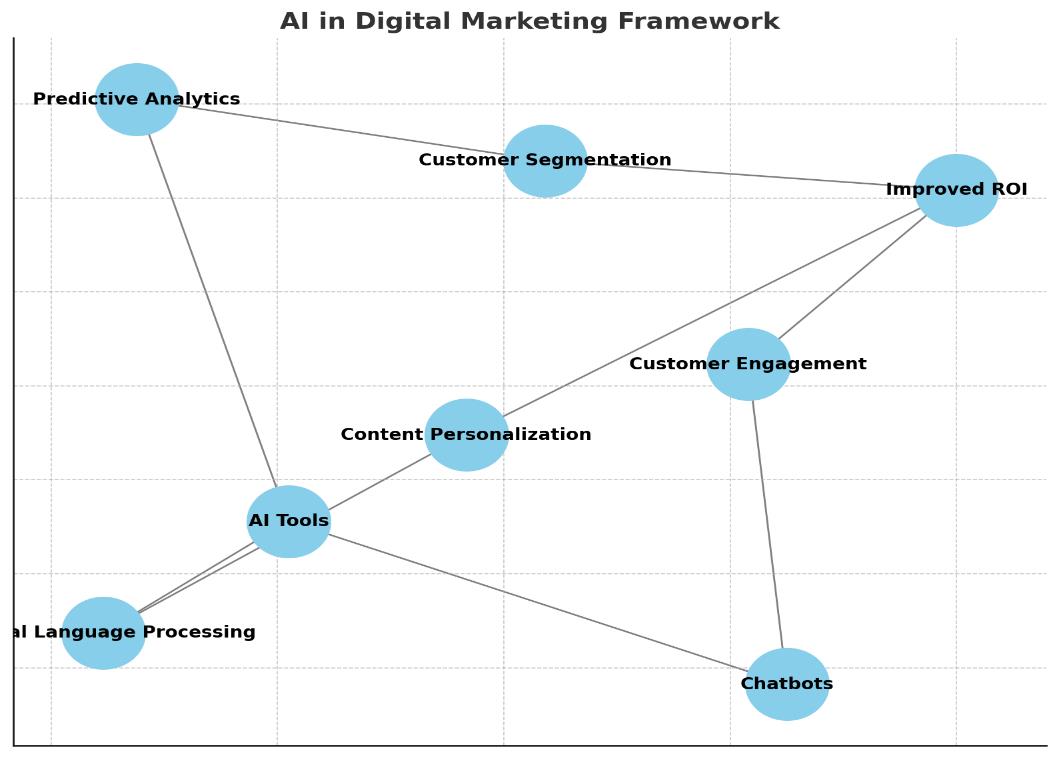
The AI in Digital Marketing (DM) Framework outlines how AI tools enhance marketing outcomes by integrating key components. AI tools such as predictive analytics (PA), chatbots, and natural language processing (NLP) play pivotal roles. PA supports customer segmentation, improving targeting accuracy (Potwora et al., 2024). Chatbots enhance customer engagement by providing personalized, real-time interactions (Dumitriu & Popescu, 2020). NLP facilitates content personalization, tailoring messaging to user preferences (Ziakis & Vlachopoulou, 2023). These components converge to drive improved ROI through optimized marketing strategies, demonstrating AI’s transformative potential in personalizing and automating DM processes (Sullivan & Fosso Wamba, 2024).
4.3. AI’s Impact in Digital Marketing
AI is reshaping the digital marketing (DM) landscape by making operations more efficient and personalized. As noted by Ziakis & Vlachopoulou (2023), AI enables businesses to tailor their marketing strategies based on detailed consumer insights (Bhuiyan et al., 2024). This personalization is made possible through machine learning (ML) algorithms that analyze vast amounts of customer data, allowing for more precise targeting. Moreover, AI-driven automation tools, such as chatbots, can handle customer queries efficiently, providing a seamless customer experience.
AI’s predictive capabilities also allow businesses to forecast trends and customer behavior, which aids in the optimization of marketing campaigns (Bhuiyan, 2024). For example, predictive analytics (PA) tools can help identify the best time to post content, improve email marketing campaigns, and enhance social media engagement strategies (Haleem et al., 2022). Furthermore, AI-powered tools such as image recognition help brands understand customer preferences based on visual content, thereby improving ad targeting and customer profiling.
4.4. AI-Driven Campaign Optimization
AI has revolutionized campaign optimization by allowing marketers to test multiple variations of their campaigns simultaneously (Bhuiyan et al., 2023). AI algorithms automatically adjust ad spending, optimize keyword targeting, and personalize content based on real-time performance data. This automation improves the efficiency of marketing budgets and maximizes ROI. As discussed by Dumitriu & Popescu (2019), AI systems are able to predict which ads are likely to perform best, streamlining the decision-making process.
4.5. AI-Based Marketing Strategies
These AI tools and strategies are critical in transforming how businesses approach marketing, from segmentation and content personalization to PA and ad targeting (Bhuiyan, 2023). AI not only enhances the precision and efficiency of marketing efforts but also offers new opportunities for businesses to engage with customers in innovative ways.
Table 3.
AI-based marketing strategies.
| Strategy | AI Application | Source |
| Customer segmentation | Machine learning to classify customers based on behavior | (Stone et al., 2020) |
| Content personalization | AI analyzes user preferences and suggests personalized content | (Sullivan & Fosso Wamba, 2024) |
| Predictive analytics | AI forecasts trends and customer behavior for campaign optimization | (Tistelgrén, 2024) |
| Chatbot integration | Automates customer service and enhances user interaction | (Salim, 2020) |
| Ad targeting | Image recognition and AI algorithms to optimize ad delivery | (Rajan, 2024) |
4.5.1. Customer Segmentation
Customer segmentation is an essential marketing strategy enabling businesses to customize their marketing initiatives for distinct customer groups (Bhuiyan, 2019). Machine learning (ML) significantly enhances this process by analyzing customer data, such as purchase history, browsing habits, and demographic information, to uncover patterns that categorize customers into relevant segments (Haleem et al., 2022). Through the application of ML algorithms, businesses can forecast which segments are most likely to engage with specific marketing campaigns, facilitating more precise and personalized marketing approaches (Bhuiyan et al., 2024).
4.5.2. Content Personalization
AI-driven content personalization leverages algorithms to customize content recommendations based on users’ preferences, behaviors, and past interactions (Bhuiyan et al., 2023). By examining diverse data sources such as browsing history, search patterns, and social media activities (Rahate et al., 2024), AI delivers highly relevant content tailored to individual users. This approach enhances engagement and user satisfaction (Ziakis & Vlachopoulou, 2023). Moreover, personalization improves the user experience and drives higher conversion rates by aligning content with users’ specific interests and needs (Paramesha et al., 2024).
4.5.3. Predictive Analytics (PA)
Predictive analytics (PA) leverages AI to forecast future trends, customer behaviors, and market movements (Bhuiyan, 2017). Using historical data and machine learning (ML) algorithms, PA helps businesses anticipate customer needs and behaviors, optimizing marketing campaigns accordingly (Potwora et al., 2024). By predicting what products customers are likely to purchase or which campaigns will yield the best results, businesses can optimize their marketing strategies and improve ROI (Paudel, 2024).
4.5.4. Chatbot Integration
Chatbots are AI-driven tools that automate customer service interactions, providing real-time responses to customer queries and facilitating smoother customer journeys (Peretz-Andersson et al., 2024). Using natural language processing (NLP) and machine learning (ML), chatbots can understand and respond to a wide variety of customer inquiries, improving customer engagement and satisfaction (Dumitriu & Popescu, 2019). By offering instant responses and 24/7 availability, chatbots not only reduce operational costs but also enhance the customer experience through personalized interactions (Peyravi et al., 2024).
4.5.5. Ad Targeting
Ad targeting through image recognition utilizes AI to analyze visual content and match ads with relevant audiences (Bhuiyan et al., 2023). By recognizing patterns in images, videos, and other visual media, AI systems can predict which types of content are most likely to engage specific customer segments (Plastino & Purdy, 2018). Additionally, AI algorithms optimize ad delivery by selecting the right content and targeting it to the right audience at the right time, improving the effectiveness of advertising campaigns (Huang & Rust, 2020). This strategy not only enhances customer profiling but also maximizes the efficiency of advertising efforts.
4.6. Roadmap for AI Integration in Digital Marketing Automation (DMA)
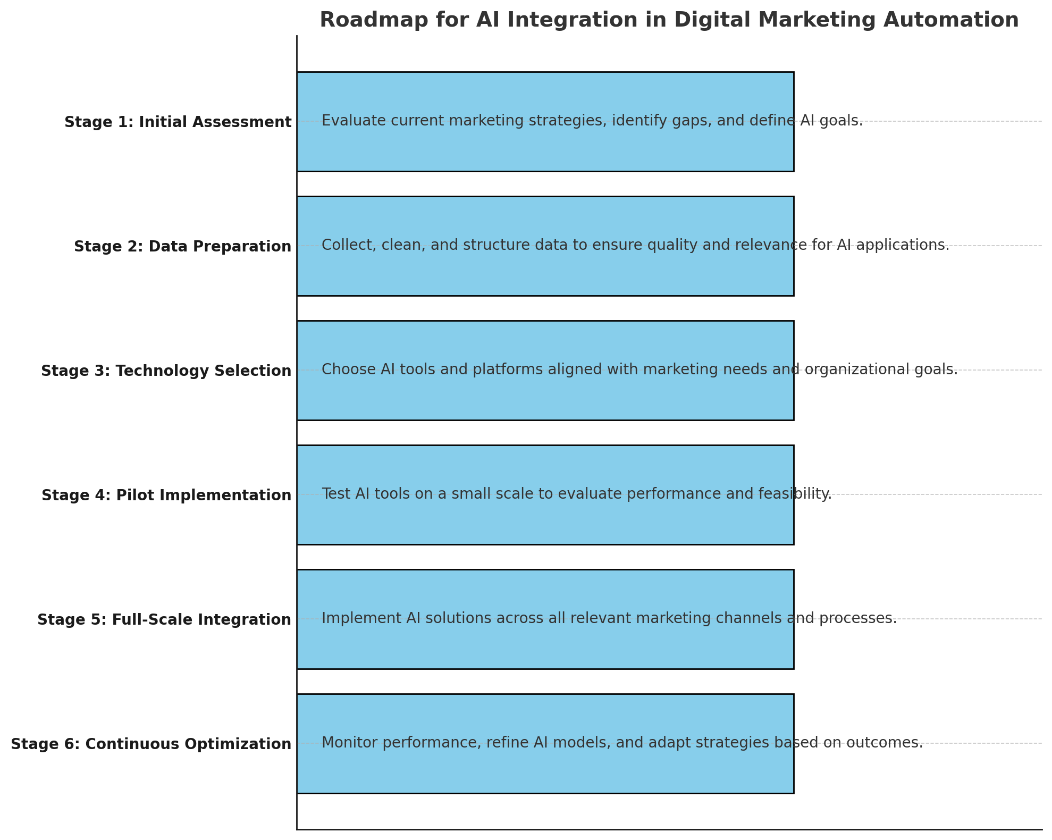
The roadmap for AI integration in DMA involves six critical stages. First, the Initial Assessment evaluates existing strategies and identifies AI goals (Haleem et al., 2022). Second, Data Preparation ensures data quality through collection and cleaning (Rahman et al., 2024). Third, Technology Selection identifies suitable AI tools aligned with business objectives (Sullivan & Fosso Wamba, 2024). Fourth, Pilot Implementation tests AI solutions on a small scale to assess feasibility (Bhuiyan, 2023). Fifth, Full-Scale Integration embeds AI into marketing processes. Finally, Continuous Optimization refines AI models and strategies for improved outcomes (Ziakis & Vlachopoulou, 2023).
5. Implications
AI is revolutionizing DMA by enhancing efficiency, precision, and personalization. The reviewed literature demonstrates several key implications for businesses and marketers:
- Enhanced Decision-Making and Strategy: AI’s ability to analyze vast datasets in real time enables businesses to make data-driven decisions (Ozkan-Okay et al., 2024). Venkataramanan et al. (2024) highlight AI’s role in sales forecasting, which can directly inform marketing automation strategies to target the right audience with optimal timing.
- Personalized Customer Experiences: Leveraging AI technologies, such as adaptive algorithms, facilitates hyper-personalized marketing approaches (Mehrotra, 2019). Sullivan and Wamba (2024) emphasize how AI adapts to market shifts, ensuring businesses remain competitive by providing tailored content that enhances customer engagement.
- Cost-Effective Campaign Management: The integration of ML and PA reduces operational inefficiencies. According to George et al. (2024), AI significantly improves marketing performance by optimizing resource allocation—from content creation to audience targeting (Mehta et al., 2024).
- Innovation in Marketing Practices: AI’s application fosters innovation, allowing marketers to experiment with new formats like conversational AI and virtual assistants (Manoharan et al., 2024). Keegan et al. (2024) underscore the value of AI in transforming traditional B2B marketing into more interactive and dynamic models.
- Ethical and Sustainable Practices: While promising, AI adoption also raises ethical concerns. Bolón-Canedo et al. (2024) advocate for green AI practices, ensuring sustainable implementation that aligns with environmental and social goals.
6. Conclusion
AI is reshaping DMA by streamlining processes and enabling businesses to deliver value efficiently (Lewis & Sarkadi, 2024). As evidenced by prior studies, AI enhances organizational performance by improving sales forecasting, campaign management, and customer interaction strategies (Venkataramanan et al., 2024; Sullivan & Wamba, 2024). However, successful implementation requires addressing challenges such as data quality, ethical practices, and adaptability. Businesses must adopt responsible AI practices, leveraging its capabilities to innovate while aligning with sustainability goals (Bolón-Canedo et al., 2024). Future research should explore the long-term impact of AI-driven marketing strategies, particularly in emerging markets, to unlock its full potential in fostering competitive advantage and driving global economic growth (Madanaguli et al., 2024).
6.1. Limitations and Future Directions for AI in Digital Marketing
Despite the challenges, AI’s potential in digital marketing automation (DMA) is steadily increasing. Future studies should prioritize enhancing AI algorithms to achieve better personalization and predictive accuracy, particularly in areas like AI-driven content generation and sophisticated data analytics (Haleem et al., 2022). Additionally, businesses are encouraged to investigate the integration of AI with emerging technologies, such as the Internet of Things (IoT) and blockchain, to optimize marketing automation and deliver more detailed, real-time customer insights (Potwora et al., 2024). As AI continues to advance, it is also critical to focus on researching the ethical considerations surrounding its application in marketing (Bhuiyan, 2023). With AI systems becoming more autonomous, ensuring transparency and accountability in AI-powered decisions will be essential for maintaining consumer trust and achieving equitable outcomes (Saura et al., 2021).
Acknowledgement:
The authors are profoundly thankful to their mentors and colleagues for their invaluable insights and constructive feedback, which helped refine this work. This paper would not have been completed without their collective efforts and contributions. The authors dedicate this work to the pursuit of knowledge and the continuous advancement of technology in the field of digital marketing automation (DMA).
Copyright:
© 2024 by the authors. This article is an open access article distributed under the terms and conditions
of the Creative Commons Attribution (CC BY) license (https://creativecommons.org/licenses/by/4.0/).
References
- Abildtrup, A. (2024). The rise of robotic process automation in the banking sector: Streamlining operations and improving efficiency. Journal of Computing and Natural Science, 31–40. https://doi.org/10.53759/181X/JCNS202404004
- Abrokwah-Larbi, K., & Awuku-Larbi, Y. (2024). The impact of artificial intelligence in marketing on the performance of business organisations: Evidence from SMEs in an emerging economy. Journal of Entrepreneurship in Emerging Economies, 16(4), 1090–1117. https://doi.org/10.1108/JEEE-07-2022-0207
- Ahmed, D. F. (2024). Artificial intelligence and its impact on customer service: Enhancing experiences or eroding trust. Review Journal for Management & Social Practices, 1(3), Article 3.
- Alabed, A., Javornik, A., Gregory-Smith, D., & Casey, R. (2024). More than just a chat: A taxonomy of consumers’ relationships with conversational AI agents and their well-being implications. European Journal of Marketing, 58(2), 373–409. https://doi.org/10.1108/EJM-01-2023-0037
- Almestarihi, R., Ahmad, A. Y. A. B., Frangieh, R., Abu-AlSondos, I., Nser, K., & Ziani, A. (2024). Measuring the ROI of paid advertising campaigns in digital marketing and its effect on business profitability. Uncertain Supply Chain Management, 12(2), 1275–1284. http://dx.doi.org/10.5267/j.uscm.2023.11.009
- Amin, A., Bhuiyan, M. R. I., Hossain, R., Molla, C., Poli, T. A., & Milon, M. N. U. (2024). The adoption of Industry 4.0 technologies by using the technology-organizational-environment framework: The mediating role to manufacturing performance in a developing country. Business Strategy & Development, 7(2), e363. https://doi.org/10.1002/bsd2.363
- Amiri, Z., Heidari, A., & Navimipour, N. J. (2024). Comprehensive survey of artificial intelligence techniques and strategies for climate change mitigation. Energy, 308, 132827. https://doi.org/10.1016/j.energy.2024.132827
- Babina, T., Fedyk, A., He, A., & Hodson, J. (2024). Artificial intelligence, firm growth, and product innovation. Journal of Financial Economics, 151, 103745. https://doi.org/10.1016/j.jfineco.2023.103745
- Bharadiya, J. P., Thomas, R. K., & Ahmed, F. (2023). Rise of artificial intelligence in business and industry. Journal of Engineering Research and Reports, 25(3), Article 3. https://doi.org/10.9734/jerr/2023/v25i3893
- Bhuiyan, M. R. I. (2017). UNDP-a2i: Citizens’ awareness survey on e-service and service simplification through the digital innovation fair. SSRN. https://dx.doi.org/10.2139/ssrn.4341799
- Bhuiyan, M. R. I. (2019). An analysis of non-performing loan of Janata Bank from the perspective of Bangladesh. SSRN. https://dx.doi.org/10.2139/ssrn.4341827
- Bhuiyan, M. R. I. (2023). The challenges and opportunities of post-COVID situation for small and medium enterprises (SMEs) in Bangladesh. PMIS Review, 2(1), 141–159. http://dx.doi.org/10.56567/pmis.v2i1.14
- Bhuiyan, M. R. I. (2024). Examining the digital transformation and digital entrepreneurship: A PRISMA-based systematic review. Pakistan Journal of Life and Social Sciences, 22(1), 1136–1150. http://dx.doi.org/10.57239/PJLSS-2024-22.1.0077
- Bhuiyan, M. R. I. (2024). Industry readiness and adaptation of fourth industrial revolution: Applying the extended TOE framework. Human Behavior and Emerging Technologies, 8830228, 14 pages. https://doi.org/10.1155/hbe2/8830228
- Bhuiyan, M. R. I., Faraji, M. R., Rashid, M., Bhuyan, M. K., Hossain, R., & Ghose, P. (2024). Digital transformation in SMEs: Emerging technological tools and technologies for enhancing the SME’s strategies and outcomes. Journal of Ecohumanism, 3(4), 211–224. https://doi.org/10.62754/joe.v3i4.3594
- Bhuiyan, M. R. I., Faraji, M. R., Tabassum, M. N., Ghose, P., Sarbabidya, S., & Akter, R. (2024). Leveraging machine learning for cybersecurity: Techniques, challenges, and future directions. Edelweiss Applied Science and Technology, 8(6), 4291–4307. https://doi.org/10.55214/25768484.v8i6.2930
- Bhuiyan, M. R. I., Hossain, R., Rashid, M., Islam, M. M., Mani, L., & Milon, M. N. U. (2024). Gravitating the components, technologies, challenges, and government transforming strategies for a Smart Bangladesh: A PRISMA-based review. Journal of Governance & Regulation, 13(3), 177–188. https://doi.org/10.22495/jgrv13i3art15
- Bhuiyan, M. R. I., Islam, M. T., Alam, S. A., & Sumon, N. S. (2023). Identifying passengers satisfaction in transportation quality: An empirical study in Bangladesh. PMIS Review, 2(1), 27–46.
- Bhuiyan, M. R. I., Milon, M. N. U., Hossain, R., Poli, T. A., & Salam, M. A. (2024). Examining the relationship between poverty and juvenile delinquency trends in a developing country. Academic Journal of Interdisciplinary Studies, 13(6), 255–274. https://doi.org/10.36941/ajis-2024-0193
- Bhuiyan, M. R. I., Uddin, K. S., & Milon, M. N. U. (2023). Prospective areas of digital economy: An empirical study in Bangladesh. Preprints. https://doi.org/10.20944/preprints202307.1652.v1
- Bhuiyan, M. R. I., Ullah, M. W., Ahmed, S., Bhuyan, M. K., & Sultana, T. (2024). Information security for an information society for accessing secured information: A PRISMA-based systematic review. International Journal of Religion, 5(11), 932–946. https://doi.org/10.61707/frfnr583
- Bhuiyan, M. R., & Akter, M. (2024). Assessing the potential usages of blockchain to transform Smart Bangladesh: A PRISMA-based systematic review. Journal of Information Systems and Informatics, 6(1), 245–269. https://doi.org/10.51519/journalisi.v6i1.659
- Bolón-Canedo, V., Morán-Fernández, L., Cancela, B., & Alonso-Betanzos, A. (2024). A review of green artificial intelligence: Towards a more sustainable future. Neurocomputing, 599, 128096. https://doi.org/10.1016/j.neucom.2024.128096
- Chintalapati, P., & Pandey, P. (2022). The role and impact of artificial intelligence in contemporary marketing. International Journal of Information Management, 58, 101234. https://doi.org/10.1016/j.ijinfomgt.2021.101234
- Coccia, M. (2024). Converging artificial intelligence and quantum technologies: Accelerated growth effects in technological evolution. Technologies, 12(5), Article 5. https://doi.org/10.3390/technologies12050066
- Dumitriu, D., & Popescu, M. A. (2019). Artificial intelligence solutions for digital marketing. Procedia Manufacturing, 46, 630–636. https://doi.org/10.1016/j.promfg.2020.03.090
- Dumitriu, D., & Popescu, M. A. (2020). Artificial intelligence solutions for digital marketing. Procedia Manufacturing, 46, 630–636. https://doi.org/10.1016/j.promfg.2020.03.090
- Durai, S., Manoharan, G., Priya, T. S., Jayanthi, R., Razak, A., & Ashtikar, S. P. (2024). Quantifying the impacts of artificial intelligence implementations in marketing. In Smart and Sustainable Interactive Marketing (pp. 120–144). IGI Global. https://doi.org/10.4018/979-8-3693-1339-8.ch008
- Dwivedi, Y. K., Hughes, L., Ismagilova, E., Aarts, G., Coombs, C., Crick, T., … & Williams, M. D. (2021). Artificial intelligence (AI): Multidisciplinary perspectives on emerging challenges, opportunities, and agenda for research, practice and policy. International Journal of Information Management, 57, 101994. https://doi.org/10.1016/j.ijinfomgt.2019.08.002
- Faraji, M. R., Shikder, F., Hasan, M. H., Islam, M. M., & Akter, U. K. (2024). Examining the role of artificial intelligence in cybersecurity (CS): A systematic review for preventing prospective solutions in financial transactions. International Journal, 5(10), 4766–4782. https://doi.org/10.61707/7rfyma13
- George, S., Sasikala, B., Sopna, P., Umamaheswari, M., & Dhinakaran, D. (2024). Role of artificial intelligence in marketing strategies and performance. Migration Letters, 21, 1589–1599.
- Girsawale, K. N., Mandavgade, R. V., Sonkusare, V., & Jambhulkar, M. K. (2024). The power of artificial intelligence in digital marketing. International Journal of Advanced Research in Science, Communication and Technology, 4(1). https://doi.org/10.48175/IJARSCT-18038
- Gusenbauer, M., & Haddaway, N. R. (2020). Which academic search systems are suitable for systematic reviews or meta‐analyses? Evaluating retrieval qualities of Google Scholar, PubMed, and 26 other resources. Research Synthesis Methods, 11(2), 181–217. https://doi.org/10.1002/jrsm.1378
- Haddaway, N. R., Page, M. J., Pritchard, C. C., & McGuinness, L. A. (2022). PRISMA2020: An R package and Shiny app for producing PRISMA 2020‐compliant flow diagrams, with interactivity for optimized digital transparency and open synthesis. Campbell Systematic Reviews, 18(2), Article e1230. https://doi.org/10.1002/cl2.1230
- Haleem, A., Javaid, M., Qadri, M. A., Singh, R. P., & Suman, R. (2022). Artificial intelligence applications for marketing: A literature-based study. International Journal of Intelligent Networks, 3, 119–132. https://doi.org/10.1016/j.ijin.2022.08.005
- Halid, H., Ravesangar, K., Mahadzir, S. L., & Halim, S. N. A. (2024). Artificial intelligence (AI) in human resource management (HRM). In C. Machado (Ed.), Building the Future with Human Resource Management (pp. 37–70). Springer International Publishing. https://doi.org/10.1007/978-3-031-52811-8_2
- Hasan, M. R., Islam, M. Z., Sumon, M. F. I., Osiujjaman, M., Debnath, P., & Pant, L. (2024). Integrating artificial intelligence and predictive analytics in supply chain management to minimize carbon footprint and enhance business growth in the USA. Journal of Business and Management Studies, 6(4), Article 4. https://doi.org/10.32996/jbms.2024.6.4.17
- Hlongwane, J., Shava, G. N., Mangena, A., & Muzari, T. (2024). Towards the integration of artificial intelligence in higher education, challenges and opportunities: The African context, a case of Zimbabwe. International Journal of Research and Innovation in Social Science, 8(3), 417–435. https://doi.org/10.47772/IJRISS.2024.803028S
- Hossain, F., Ahmed, G. M. S., Shuvo, S. P. P., Kona, A. N., Raina, M. U. H., & Shikder, F. (2024). Unlocking artificial intelligence for strategic market development and business growth: Innovations, opportunities, and future directions. Edelweiss Applied Science and Technology, 8(6), 5825–5846. https://doi.org/10.55214/25768484.v8i6.3263
- Hossain, R. (2024). Adopting Industry 4.0: A strategic solution for transforming Smart Bangladesh: Prospective connections, opportunities, and challenges. Pakistan Journal of Life and Social Sciences, 22(1), 3304–3323.
- Hossain, R., Ghose, P., Chowdhury, T. M., Hossen, M. D., Hasan, M. N., & Mani, L. (2024). Ownership structures and firm performance: A correlation and regression analysis of financial institutions in Bangladesh. Pakistan Journal of Life and Social Sciences, 22(2), 6278–6295. https://doi.org/10.57239/PJLSS-2024-22.2.00473
- Hossen, M. D. (2024). What factors influence the increasing dependency on mobile banking in Bangladesh? A quantitative study in Bangladesh. International Journal of Religion, 5(11), 4821–4837.
- Hossen, M. D., Abedin, M. Z., Chowdhury, T. M., Islam, Z., & Kabir, M. R. (2025). Unveiling the impact of e-governance on the transformation from digital to smart Bangladesh. Pakistan Journal of Life & Social Sciences, 23(1), 85–108. https://doi.org/10.57239/PJLSS-2025-23.1.009
- Huang, M.-H., & Rust, R. T. (2020). A strategic framework for artificial intelligence in marketing. Journal of the Academy of Marketing Science. https://doi.org/10.1007/s11747-020-00749-9
- Islam, M. S. (2022). Fifty years of Bangladesh’s relations with Europe: Changes and continuity. Journal of Bangladesh and Global Affairs, 1(2). https://doi.org/10.55875/jbga.bd.oct22.005
- Islam, Z., Bhuiyan, M. R. I., Poli, T. A., Hossain, R., & Mani, L. (2024). Gravitating towards Internet of Things: Prospective applications, challenges, and solutions of using IoT. International Journal of Religion, 5(2), 436–451. https://doi.org/10.61707/awg31130
- Keegan, B. J., Dennehy, D., & Naudé, P. (2024). Implementing artificial intelligence in traditional B2B marketing practices: An activity theory perspective. Information Systems Frontiers, 26(3), 1025–1039. https://doi.org/10.1007/s10796-022-10294-1
- Lepri, B., Oliver, N., Letouzé, E., Pentland, A., & Vinck, P. (2018). Fair, transparent, and accountable algorithmic decision-making processes: The premise, the proposed solutions, and the open challenges. Philosophy & Technology, 31(4), 611–627. https://doi.org/10.1007/s13347-017-0279-x
- Lewis, P. R., & Sarkadi, Ş. (2024). Reflective artificial intelligence. Minds and Machines, 34(2), 14. https://doi.org/10.1007/s11023-024-09664-2
- Madanaguli, A., Sjödin, D., Parida, V., & Mikalef, P. (2024). Artificial intelligence capabilities for circular business models: Research synthesis and future agenda. Technological Forecasting and Social Change, 200, 123189. https://doi.org/10.1016/j.techfore.2023.123189
- Mani, L. (2024). Gravitating towards the digital economy: Opportunities and challenges for transforming smart Bangladesh. Pakistan Journal of Life and Social Sciences, 22(1), 3324–3334. https://doi.org/10.57239/PJLSS-2024-22.1.00241
- Manoharan, G., Razak, A., Rao, C. V. G., Ashtikar, S. P., & Nivedha, M. (2024). Artificial intelligence at the helm: Steering the modern business landscape toward progress. In The Ethical Frontier of AI and Data Analysis (pp. 72–99). IGI Global. https://doi.org/10.4018/979-8-3693-2964-1.ch005
- Masum, M. Y., Mia, M. N., Islam, M. S., Ahmed, G. S., Milon, M. N. U., & Hossain, R. (2024). Poverty alleviation through tourism development in Bangladesh: Theoretical perspectives and empirical evidence. Educational Administration: Theory and Practice, 30(5), 10050–10064.
- Mehrotra, D. D. (2019). Basics of artificial intelligence & machine learning. Notion Press.
- Mehta, A., Niaz, M., Adetoro, A., & Nwagwu, U. (2024). Advancements in manufacturing technology for the biotechnology industry: The role of artificial intelligence and emerging trends. International Journal of Chemistry, Mathematics and Physics, 8(2), 12–18. https://doi.org/10.22161/ijcmp.8.2.3
- Milon, M. N. U. (2024). Gravitating towards artificial intelligence on anti-money laundering: A PRISMA based systematic review. International Journal of Religion, 5(7), 303–315. https://doi.org/10.61707/py0fe669
- Milon, M. N. U., Ghose, P., Pinky, T. C., Tabassum, M. N., Hasan, M. N., & Khatun, M. (2024). An in-depth PRISMA based review of cybercrime in a developing economy: Examining sector-wide impacts, legal frameworks, and emerging trends in the digital era. Edelweiss Applied Science and Technology, 8(4), 2072–2093. https://doi.org/10.55214/25768484.v8i4.1583
- Mustak, M., Salminen, J., Plé, L., & Wirtz, J. (2021). Artificial intelligence in marketing: Topic modeling, scientometric analysis, and research agenda. Journal of Business Research, 124, 389–404. https://doi.org/10.1016/j.jbusres.2020.10.044
- Nejad, M. G. (2022). Research on financial innovations: An interdisciplinary review. International Journal of Bank Marketing, 40(3), 578–612. https://doi.org/10.1108/IJBM-07-2021-0305
- Ozkan-Okay, M., Akin, E., Aslan, Ö., Kosunalp, S., Iliev, T., Stoyanov, I., & Beloev, I. (2024). A comprehensive survey: Evaluating the efficiency of artificial intelligence and machine learning techniques on cyber security solutions. IEEE Access, 12, 12229–12256. https://doi.org/10.1109/ACCESS.2024.3355547
- Page, M. J., McKenzie, J. E., Bossuyt, P. M., Boutron, I., Hoffmann, T. C., Mulrow, C. D., et al. (2021). The PRISMA 2020 statement: An updated guideline for reporting systematic reviews. BMJ, 372, n71. https://doi.org/10.1136/bmj.n71
- Paramesha, M., Rane, N. L., & Rane, J. (2024). Artificial intelligence, machine learning, deep learning, and blockchain in financial and banking services: A comprehensive review. Partners Universal Multidisciplinary Research Journal, 1(2), Article 2. https://doi.org/10.5281/zenodo.12826933
- Paudel, R. (2024). The impact of automation and artificial intelligence (AI) on leadership and the workforce. Indonesian Journal of Banking and Financial Technology, 2(2), Article 2. https://doi.org/10.55927/fintech.v2i2.8904
- Peretz-Andersson, E., Tabares, S., Mikalef, P., & Parida, V. (2024). Artificial intelligence implementation in manufacturing SMEs: A resource orchestration approach. International Journal of Information Management, 77, 102781. https://doi.org/10.1016/j.ijinfomgt.2024.102781
- Peyravi, Bahman, Julija Nekrošienė, and Liudmila Lobanova. “Revolutionised technologies for marketing: Theoretical review with focus on artificial intelligence.” Business: Theory and Practice, 21.2 (2020): 827–834.
- Plastino, E., & Purdy, M. (2018). Game changing value from Artificial Intelligence: Eight strategies. Strategy & Leadership, 46(1), 16–22. https://doi.org/10.1108/SL-11-2017-0106
- Poli, T. A. (2024). Mediating Role of Entrepreneurship Capability in Sustainable Performance and Women Entrepreneurship: An Evidence from a Developing Country. Journal of Ecohumanism, 3(3), 2006–2019. https://doi.org/10.62754/joe.v3i3.3553
- Potwora, M., Vdovichena, O., Semchuk, D., Lipych, L., & Saienko, V. (2024). The use of artificial intelligence in marketing strategies: Automation, personalization and forecasting. Journal of Management World, 2024(2), 41–49. http://dx.doi.org/10.53935/jomw.v2024i2.275
- Rahate, K. P., Sengar, M. S., & Patel, S. (2024). Artificial Intelligence in Medical Imaging by Machine Learning and Deep Learning. In Approaches to Human-Centered AI in Healthcare (pp. 121–159). IGI Global. https://doi.org/10.4018/979-8-3693-2238-3.ch006
- Rahman, M. M., Bhuiyan, M. R., & Alam, S. M. (2024). The Empirical Study on the Impact of the COVID-19 on Small and Medium Enterprises (SMEs) in Bangladesh. Journal of Information Systems and Informatics, 6(1), 527–547. https://doi.org/10.51519/journalisi.v6i1.686
- Rahman, M. M., Faraji, M. R., Islam, M. M., Khatun, M., Uddin, S., & Hasan, M. H. (2024). Gravitating towards Information Society for Information Security in Information Systems: A Systematic PRISMA Based Review. Pakistan Journal of Life and Social Sciences (PJLSS), 22(1). https://doi.org/10.57239/PJLSS-2024-22.1.0089
- Rajan, P. (2024). Integrating IoT Analytics into Marketing Decision Making: A Smart Data-Driven Approach. International Journal of Data Informatics and Intelligent Computing, 3(1), Article 1. https://doi.org/10.59461/ijdiic.v3i1.92
- Rane, N. L., Paramesha, M., Choudhary, S. P., & Rane, J. (2024). Artificial Intelligence, Machine Learning, and Deep Learning for Advanced Business Strategies: A Review. Partners Universal International Innovation Journal, 2(3), Article 3. https://doi.org/10.5281/zenodo.12208298
- Rethlefsen, M. L., Kirtley, S., Waffenschmidt, S., Ayala, A. P., Moher, D., Page, M. J., & Koffel, J. B. (2021). PRISMAS: an extension to the PRISMA statement for reporting literature searches in systematic reviews. Systematic Reviews, 10, 1–19. https://doi.org/10.1186/s13643-020-01542-z
- Salim, S. (2020). Understanding the Role of Artificial Intelligence and Its Future Social Impact. IGI Global.
- Sarker, P., Sayed, A., Siddique, A. B., Apu, A. S., Tasnim, S. A., & Mahmud, R. (2024). A Comparative Review on Stock Market Prediction Using Artificial Intelligence. Malaysian Journal of Science and Advanced Technology, 383–404. https://doi.org/10.56532/mjsat.v4i4.316
- Saura, J. R., Ribeiro-Soriano, D., & Palacios-Marqués, D. (2021). Setting B2B Digital Marketing in Artificial Intelligence-Based CRMs: A Review and Directions for Future Research. Industrial Marketing Management, 98, 161–178. https://doi.org/10.1016/j.indmarman.2021.08.006
- Sawon, M. M. H., Lina, F. Y., & Hossain, M. A. (2024). AI in the Tourism and Hospitality Industry in Bangladesh: Challenges and Ways Forward. In Impact of AI and Tech-Driven Solutions in Hospitality and Tourism (pp. 84–102). IGI Global. https://doi.org/10.4018/979-8-3693-6755-1.ch005
- Shanmugam, G., Rajendran, D., Thanarajan, T., Murugaraj, S. S., & Rajendran, S. (2023). Artificial Intelligence as a Catalyst in Digital Marketing: Enhancing Profitability and Market Potential. Ingénierie des Systèmes d’Information, 28(6). https://doi.org/10.18280/isi.280620
- Stone, M., Aravopoulou, E., Ekinci, Y., Evans, G., Hobbs, M., Labib, A., … & Machtynger, L. (2020). Artificial intelligence (AI) in strategic marketing decision-making: a research agenda. The Bottom Line, 33(2), 183–200.
- Sullivan, Y., & Fosso Wamba, S. (2024). Artificial intelligence and adaptive response to market changes: A strategy to enhance firm performance and innovation. Journal of Business Research, 174, 114500. https://doi.org/10.1016/j.jbusres.2024.114500
- Tistelgrén, S. (2024). Artificial Intelligence in Software Development: Exploring Utilisation, Tools, and Value Creation [Master’s thesis]. http://www.theseus.fi/handle/10024/853451
- Toorajipour, R., Oghazi, P., & Palmié, M. (2024). Data ecosystem business models: Value propositions and value capture with Artificial Intelligence of Things. International Journal of Information Management, 78, 102804. https://doi.org/10.1016/j.ijinfomgt.2024.102804
- Ucar, A., Karakose, M., & Kırımça, N. (2024). Artificial Intelligence for Predictive Maintenance Applications: Key Components, Trustworthiness, and Future Trends. Applied Sciences, 14(2), Article 2. https://doi.org/10.3390/app14020898
- Uddin, K. S., Bhuiyan, M. R. I., & Hamid, M. (2024). Perception towards the Acceptance of Digital Health Services among the People of Bangladesh. WSEAS Transactions on Business and Economics, 21, 1557–1570. https://doi.org/10.37394/23207.2024.21.127
- Uddin, K., & Hossain, S. (2010). A comparative study on silk dyeing with reactive dye and acid dyes. International Journal of Engineering and Technology, 10(6), 21–26.
- Venkataramanan, S., Sadhu, A. K. R., Gudala, L., & Reddy, A. K. (2024). Leveraging Artificial Intelligence for Enhanced Sales Forecasting Accuracy: A Review of AI-Driven Techniques and Practical Applications in Customer Relationship Management Systems. Australian Journal of Machine Learning Research & Applications, 4(1), Article 1.
- Verma, R., Choudhary, S., & Shankar, A. (2020). The Evolution of Artificial Intelligence in Marketing: A FourDecade Overview. Journal of Marketing Research, 57(3), 543–565. https://doi.org/10.1509/jmr.19.0179
- [91] Vlačić, B., Corbo, L., e Silva, S. C., & Dabić, M. (2021). The evolving role of artificial intelligence in marketing: A
- review and research agenda. Journal of business research, 128, 187-203. https://doi.org/10.1016/j.jbusres.2021.01.055
- [92] Werbos, P. J. (2024). 6 – The new AI: Basic concepts, and urgent risks and opportunities in the internet of things. In
- R. Kozma, C. Alippi, Y. Choe, & F. C. Morabito (Eds.), Artificial Intelligence in the Age of Neural Networks and Brain
- Computing (Second Edition) (pp. 93–127). Academic Press. https://doi.org/10.1016/B978-0-323-96104-2.00006-3
- [93] Zaki, M. (2019). Digital transformation: harnessing digital technologies for the next generation of services. Journal of
- Services Marketing, 33(4), 429-435. https://doi.org/10.1108/JSM-01-2019-0034
- [94] Zhang, H., Niyato, D., Zhang, W., Zhao, C., Du, H., Jamalipour, A., Sun, S., & Pei, Y. (2024). The Roles of Generative
- Artificial Intelligence in Internet of Electric Vehicles (No. arXiv:2409.15750). arXiv.
- https://doi.org/10.48550/arXiv.2409.15750
- [95] Ziakis, C., & Vlachopoulou, M. (2023). Artificial Intelligence in Digital Marketing: Insights from a Comprehensive
- Review. Information, 14(12), 664. https://doi.org/10.3390/info14120664